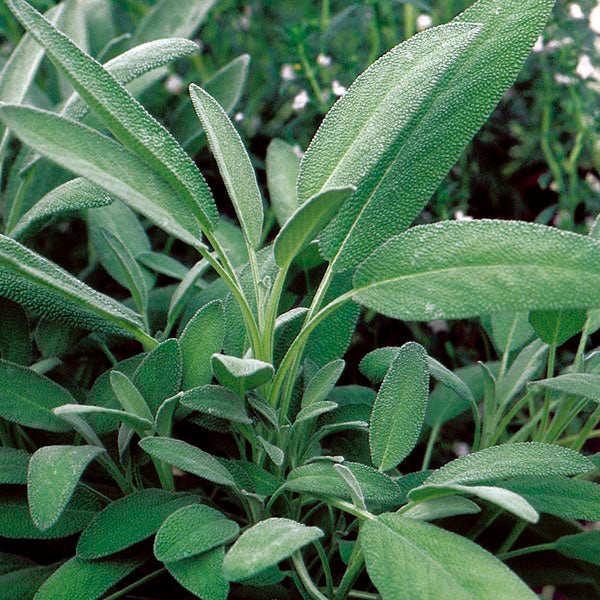
An essential aromatic for the kitchen garden, Sage features soft, fuzzy grey-green leaves and beautiful blue flowers. Known for its earthy, savory flavor, it is the classic choice for stuffings, poultry, and meat dishes. This hardy Mediterranean perennial is as beautiful in the landscape as it is useful in the kitchen.
Seed & Planting Care
Sage can be delicate to start, so paying close attention to soil temperature and moisture is key to success.
Sowing Window: Start indoors mid-February to mid-April for the most reliable results. Alternatively, direct sow starting in mid-April.
Germination Essentials: Use bottom heat to maintain an optimal soil temperature of 15–21°C (60–70°F).
Sowing Depth: Plant seeds 3mm (1/8″) deep.
Moisture Control: Keep the soil "just moist," never wet. Seeds typically sprout within 14–21 days.
Spacing: Once established, thin or transplant seedlings to 45–60cm (18–24″) apart.
Growing Conditions
Sun & Soil: Requires full sun and average, loose, fluffy soil.
Drainage is Vital: Sage is highly susceptible to root rot. It requires excellent drainage; growing in raised beds is highly recommended to prevent waterlogging.
Feeding: Incorporate compost at planting time, but avoid added fertilizers, which can diminish the intensity of the essential oils.
Watering: This plant loves hot weather and dry soil. Allow the soil to dry out significantly between waterings.
Maintenance & Harvest
Hardiness: Perennial in Zones 4–5 and warmer.
Days to Harvest: 70 days.
Pro Tip (Pinching): Pinch the tips of the plant several times during spring and early summer. This encourages a bushier habit and delays flowering, keeping the leaves tender and flavorful.
Longevity: Sage is a short-lived perennial. Plan to divide your plants every 3–4 years to maintain vigor and prevent the stems from becoming too woody.
Uses & History
Commonly used both fresh and dried, sage brings a bold depth to eggs, cheeses, pork, and traditional stuffing blends. While the plant can reach up to 3' in bloom, its stems tend to be "floppy," making it a lovely, softening addition to the edge of a garden path where its fragrance can be enjoyed.
We are deeply grateful for your support and for joining us in the belief that kindness is everything. We are all connected, and together we are making a beautiful, positive impact on the world.